0.1uF 100V X7R 1206 Ceramic Capacitor Comparison Guide
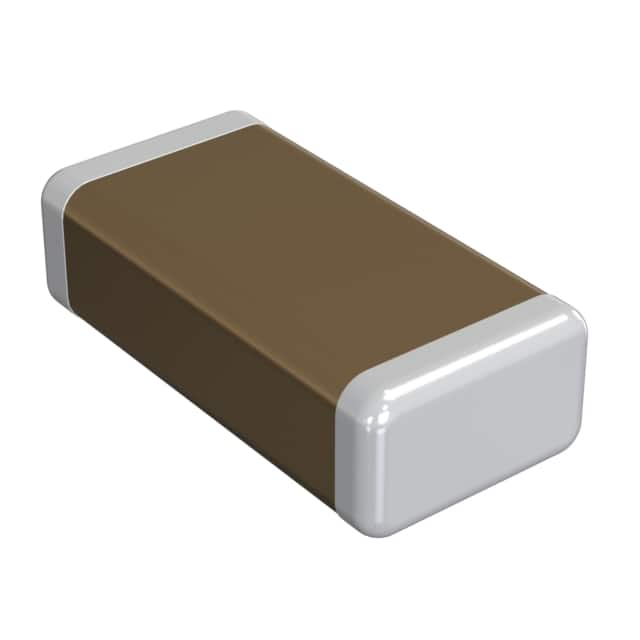
At the heart of nearly every electronic assembly lies a deceptively simple passive device: the multilayer ceramic capacitor, or MLCC. The Murata Electronics GCM319R72A104KA37D — a 0.1 µF, 100 V, X7R dielectric capacitor in a 1206 (3216 metric) case — belongs to this category, and specifically to Murata's GCM series, which is engineered for automotive and high-reliability applications. Capacitors in this class perform several critical roles: decoupling and bypassing supply rails to suppress high-frequency noise, filtering and smoothing in power conversion circuits, AC coupling between stages, and local energy storage to absorb transient current demands. The 0.1 µF value is one of the most widely deployed in electronics, routinely placed near IC power pins as the first line of defense against switching noise.
When selecting an MLCC of this type, several parameters drive the decision. Capacitance and tolerance set the nominal performance, but the dielectric class is equally important: X7R offers ±15% capacitance variation over −55 °C to +125 °C, a pragmatic balance between stability and volumetric efficiency compared with C0G (very stable but low density) and Y5V (high density but highly unstable). Voltage rating must account for DC bias derating — a 100 V part operated at 50 V may lose a meaningful fraction of its nominal capacitance, and X7R parts are more susceptible than C0G. Buyers should also weigh ESR and ESL (critical for decoupling effectiveness), case size (1206 offers easier handling, better thermal cycling robustness, and higher voltage headroom than 0603 or 0402), and termination finish — this part uses a tin-plated termination suitable for standard reflow, though automotive-grade variants often specify conductive epoxy or soft-termination options for flex-crack resistance.
Compared with alternatives, the GCM319R72A104KA37D occupies a premium position. General-purpose 0.1 µF X7R 1206 parts from volume manufacturers can cost noticeably less, but they typically carry commercial temperature grades and less rigorous qualification. Murata's GCM line is AEC-Q200 qualified, meaning it has passed automotive stress testing for thermal shock, humidity, and board flexure. Against C0G alternatives, the X7R part delivers far more capacitance per unit volume and lower cost per microfarad, at the expense of voltage and temperature coefficient. Against smaller 0603 or 0402 equivalents, the 1206 body provides superior mechanical robustness and higher rated voltage for a given capacitance, which matters in industrial and automotive environments where board flex and thermal cycling are real threats. Availability is generally strong given Murata's scale, though automotive-grade parts are subject to tighter allocation during demand surges.
Several industry trends are shaping this component category. Electrification of vehicles and the proliferation of 48 V and high-voltage architectures are pushing demand for higher-voltage MLCCs with automotive qualification. Meanwhile, the ongoing miniaturization of consumer electronics pulls volume toward 0402 and 0201 sizes, which can tighten supply and lengthen lead times for larger case sizes like 1206 as manufacturers rebalance capacity. Base-metal electrode (BME) technology has largely displaced precious-metal electrodes, improving cost and supply stability, but it also means buyers must verify that a candidate part's dielectric and termination system match their process. Finally, supply-chain resilience initiatives have made second-sourcing and lifecycle monitoring standard procurement practice, particularly for automotive and medical customers.
Choose the GCM319R72A104KA37D when your design demands automotive-grade reliability, a 100 V rating for margin against transients or DC bias derating, and the mechanical robustness of a 1206 package. It is an excellent fit for under-hood modules, industrial power supplies, and any application where board flexure or thermal cycling could crack a smaller capacitor. Opt for a general-purpose commercial part instead if the design is cost-sensitive, confined to benign environments, and operating well below the voltage rating. Choose a C0G dielectric if your circuit is a timing or filter network where capacitance stability over temperature and voltage is non-negotiable.
On the procurement side, buyers should confirm current lead times with the distributor, as automotive-grade MLCCs can stretch to 20–30 weeks during tight cycles, and check the part's lifecycle status — the GCM series is mature and active, but Murata periodically updates termination and packaging options. Second-source options include AEC-Q200-qualified 0.1 µF 100 V X7R 1206 parts from TDK, KEMET, Samsung Electro-Mechanics, and Yageo, though dielectric formulations and DC-bias behavior vary between vendors, so qualification testing is advisable before substituting. Where possible, secure a franchise-authorized supply channel to avoid counterfeit risk, and consider buffer inventory or a dual-approved bill of materials for long-life programs.