MEMS Oscillators in 2025: Why the SIT1602BI 10MHz XO Signals a Industry Shift
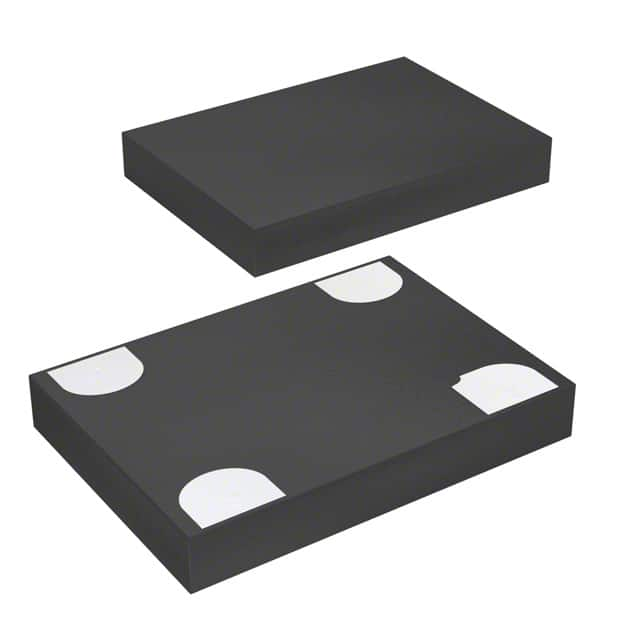
The SiTime SIT1602BI-82-18E-10.000000 is a 10 MHz MEMS oscillator in a compact 3225 package, delivering H/LV-CMOS output from a 1.8V supply. It represents the broader migration from quartz-based timing to silicon MEMS resonators, a shift that has matured from novelty to mainstream over the past decade. SiTime's architecture pairs a proprietary MEMS resonator with a temperature-compensated CMOS oscillator circuit in a single package, eliminating the mechanical fragility and process variability inherent in quartz. For a part like this SKU, the practical result is tighter frequency stability, higher shock and vibration tolerance, and faster startup — characteristics that matter increasingly in portable, automotive, and industrial designs where quartz crystals have historically been a reliability weak point.
Recent innovation in this segment centers on integration and programmability. SiTime's latest generations push frequency flexibility, lower jitter, and on-chip features such as spread-spectrum and multiple output configurations, allowing a single silicon die to serve many SKUs. This "one die, many configurations" model is a structural advantage over quartz, where every frequency requires a distinct crystal blank and tuning process. For buyers, it means shorter customization cycles and reduced risk of obsolescence for specific frequency variants.
Market demand for MEMS oscillators continues to outpace the broader timing market. The drivers are familiar: ubiquitous connectivity, edge computing, electrification, and the proliferation of sensors in consumer and industrial devices. In the 1–50 MHz range — where this 10 MHz part sits — demand is anchored by networking equipment, industrial control, portable medical devices, and consumer electronics. The 1.8V H/LV-CMOS variant specifically targets low-power, battery-sensitive designs where legacy 3.3V quartz oscillators waste energy. As device makers push for lower power budgets and smaller footprints, the 3225 package and 1.8V operation become default choices rather than premium options.
Supply chain dynamics have shifted meaningfully. MEMS timing devices are fabricated on standard CMOS lines in high-volume foundries, which gives the category a structural resilience that quartz lacks — quartz depends on a narrower base of crystal blank suppliers and precision tuning capacity, both of which have seen tightness during demand surges. Lead times for mainstream SiTime parts have generally normalized from the extended stretches seen during 2021–2022, though specific configurations and packaging variants can still see allocation. Pricing has trended downward on a per-function basis as volumes scale and competition from second-source MEMS vendors intensifies, but the premium over commodity quartz remains, justified by reliability and integration benefits. Buyers should expect continued gradual price erosion on high-volume standard frequencies like 10 MHz, with premiums persisting for automotive-qualified and extended-temperature variants.
Emerging applications are broadening the demand base. Automotive ADAS and infotainment systems are adopting MEMS oscillators for their vibration immunity and AEC-Q100 qualification paths. Industrial IoT gateways and edge AI devices need robust timing in thermally harsh environments. Wearables and hearables demand the smallest possible footprint at low voltage. Medical devices — from infusion pumps to portable diagnostics — value the shock resistance for field and ambulatory use. Each of these segments is growing faster than legacy telecom and computing, which diversifies demand and reduces the cyclicality that once characterized the timing market.
The technology roadmap points toward higher integration and tighter performance. Expect continued jitter reduction, more frequencies available from a single die, and greater use of programmable and in-system-configurable oscillators. SiTime and competitors are also investing in multi-output and clock-tree integration, potentially absorbing functions currently handled by separate clock generators. Automotive qualification at higher temperature grades and functional safety compliance (ISO 26262) will expand the addressable market further. The long-term trajectory is clear: MEMS timing continues to take share from quartz across nearly every segment, with quartz retreating to niche high-precision and legacy sockets.
Regulatory factors favor MEMS. RoHS and REACH compliance are straightforward for silicon-based devices, and the absence of lead-containing solder seals and quartz-specific materials simplifies documentation. Automotive qualifications — AEC-Q100 and AEC-Q200 — are increasingly table stakes, and SiTime's automotive portfolio has expanded accordingly. For industrial and medical customers, long-term availability commitments and PPAP documentation are becoming as important as the technical specification itself.
For procurement teams, several strategic actions are warranted. First, qualify MEMS alternatives now for any design still dependent on quartz oscillators at 10 MHz and similar frequencies — the reliability and supply benefits are real, and qualification cycles take time. Second, engage distributors early on configuration-specific lead times, since standard frequencies move faster than custom or extended-temperature variants. Third, build dual-source strategies where possible, but recognize that MEMS oscillator pin-compatibility across vendors is not universal — verify footprint and output compatibility before assuming interchangeability. Fourth, for automotive and medical programs, secure long-term supply agreements and lifecycle commitments rather than relying on spot availability. Finally, monitor pricing trends by frequency band: high-volume standard parts will see continued erosion, while specialized variants will hold premium pricing. Treat MEMS timing as a strategic category, not a commodity line item — the decisions made at design-in stage determine cost, reliability, and supply resilience for the life of the product.