Troubleshooting CAP CER 0.22UF 25V X5R 0612: Fix Common Issues
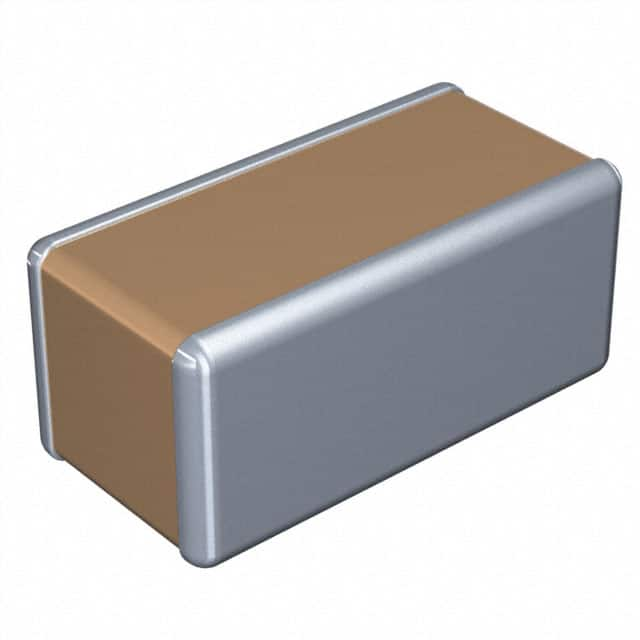
I've worked with the TDK C1632X5R1E224M070AC (0.22µF, 25V, X5R, 0612 case) on dozens of customer designs, mostly as bulk decoupling on power rails and as input/output caps on switching regulators. It's a workhorse part, but its 0612 (wide-terminal, low-inductance) footprint and X5R dielectric create specific failure patterns you should know about before you start probing.
Typical failure modes and root causes. The most common field failure I see is cracked ceramic from board flex. The 0612 wide-body format is more resistant to flex cracks than an 0805 in the same value, but it is not immune, and because the terminals are on the long edges, a crack across the body often shows as a partial short or a value that drops to a fraction of nominal. Second is DC bias derating surprise: X5R at 25V loses significant capacitance under bias, and engineers who expect 0.22µF at 20V operating voltage get maybe 40–60% of that. Third is solder voiding under the terminations from an unbalanced reflow profile, which causes intermittent opens after thermal cycling. Fourth, less common but real, is thermal shock cracking during hand rework with an iron held too long on one terminal.
Step-by-step debugging methodology. Start by confirming the symptom is actually capacitive: scope the rail for ripple and transient droop before touching the part. If ripple is high, measure the cap in-circuit with an LCR meter at 1kHz and 100kHz, but de-solder one terminal first — in-circuit readings on a 0.22µF part are dominated by parallel impedance and will mislead you. Next, inspect under magnification for cracks, especially at the body-to-termination junction. Then check DC bias: if the rail sits above 10V, pull the datasheet derating curve and calculate actual capacitance at your operating point. Only after those three steps should you suspect the part itself.
Common schematic and layout mistakes. I regularly see this cap placed too far from the IC pin it's decoupling — at 0612 size the loop inductance matters, and 5mm of trace can erase the benefit. Another frequent error is using one 0.22µF where the datasheet calls for 1µF plus a small cap; the X5R's ESR and bias loss make it a poor sole bulk element. On layout, avoid placing the cap near board edges or mounting holes where flex stress concentrates, and keep the ground return via directly adjacent rather than shared with a high-current path. Also check that your reflow profile doesn't exceed the part's rated 260°C peak with excessive time above liquidus.
Verifying authenticity and quality. TDK parts have laser-marked or ink-marked codes; counterfeit 0612 ceramics are less common than counterfeit ICs but do appear in broker channels. Check the reel label against TDK's lot format, verify the capacitance and ESR against the datasheet at 1kHz, and measure DC bias behavior — a genuine X5R will show the documented derating curve, while a relabeled Y5V or cheap X7R substitute will behave very differently. A quick X-ray or cross-section on a sample lot will reveal voids or wrong internal electrode count.
Measurement techniques and equipment. Use an LCR meter with a four-terminal fixture for de-soldered parts; a handheld multimeter's capacitance mode is unreliable below 1µF and useless for bias testing. For in-circuit ripple, use a scope with a short ground spring, not the long clip lead. A micro-ohmmeter or ESR meter helps spot cracked terminations that still read nominal capacitance. For thermal cycling issues, a thermal chamber plus continuous resistance monitoring catches intermittent opens that a single measurement misses.
When to suspect the component vs. the circuit. Suspect the circuit first if the failure is repeatable across multiple boards and correlates with load transients or layout. Suspect the component if failures cluster in one lot, appear after rework, or show physical cracks. A quick swap test with a known-good cap from a different lot resolves most ambiguity.
Real-world case studies. One customer had a 12V rail with 300mV of ripple despite three of these caps; the issue was placement 8mm from the regulator and a shared ground via — moving the caps to the pin and adding a dedicated via dropped ripple to 40mV. Another had intermittent shutdowns on a 20V rail; the caps measured fine cold but dropped to 0.09µF at temperature because the design ran at 85°C ambient, outside the X5R's comfortable range — replacing with a higher-voltage X7R fixed it. A third found cracked caps after a depanelization process that flexed the board; switching to a routed rather than V-scored panel eliminated the field returns.