48V 398W AC/DC Converters: Industry Insights & MFLS400 Trends
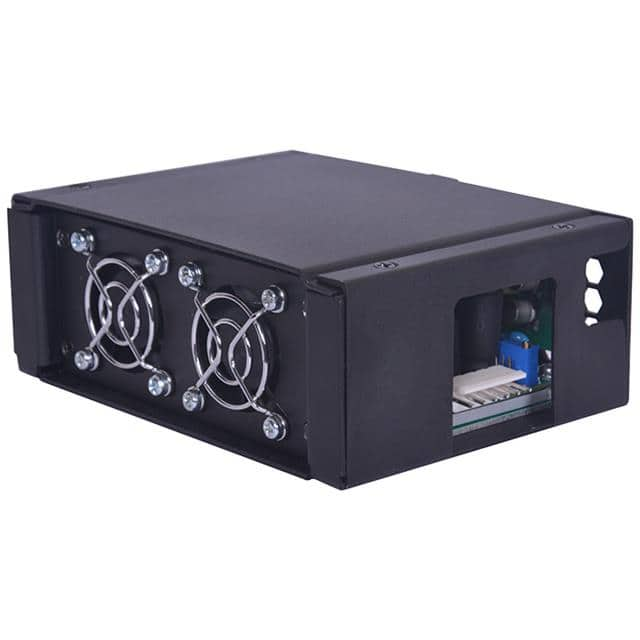
The Bel Power Solutions MFLS400-1348-SF is a 398W enclosed AC/DC converter delivering a regulated 48V output, and it sits at the intersection of several forces reshaping the power conversion market. For distributors and procurement teams, understanding what drives demand for this class of product—and where the technology is heading—is essential for inventory and sourcing strategy.
Technology and recent innovations. This converter class typically combines active power factor correction with high-frequency switching topologies, delivering efficiencies in the low-to-mid 90s percent range across a wide universal input (90–264VAC). Recent innovations in this segment include higher switching frequencies enabled by wide-bandgap semiconductors, particularly GaN and SiC devices, which shrink magnetics and improve thermal density. Digital control loops using DSPs and MCUs now allow programmability, remote monitoring via PMBus, and adaptive thermal management. Conformal coating, current sharing for parallel operation, and fan-cooled enclosed form factors like the MFLS400 series address industrial ruggedness requirements. Standby power consumption has also dropped meaningfully, helping OEMs meet efficiency mandates.
Market trends and demand drivers. The 48V bus is increasingly the default intermediate rail in telecom, data center, industrial automation, and test equipment. Demand for 300–500W enclosed converters is being pulled by edge computing buildouts, 5G small cell deployments, and warehouse automation. The broader AC/DC converter market is growing at a mid-single-digit CAGR, but the 48V industrial segment is outpacing that as more systems standardize on 48V for efficiency and compatibility with battery backup architectures. Replacement and aftermarket demand for established platforms like the MFLS400 series provides a stable baseline.
Supply chain dynamics. Lead times for industrial AC/DC converters normalized substantially after the 2021–2023 allocation crisis, with most standard configurations now quoting in the 8–16 week range, though custom or low-volume SKUs can stretch longer. Pricing has stabilized after two years of increases, with modest erosion expected in commodity power supplies as capacity added during the shortage comes online. Bel Power Solutions' manufacturing footprint spans North America and Asia, giving buyers dual-region options—valuable for customers with domestic-content or tariff considerations. Watch for magnetics and controller IC lead times as the key constraint; these upstream components remain the most volatile input. Currency exposure and shipping costs add further variability.
Emerging applications. Beyond traditional industrial controls, several segments are driving new demand: EV charging infrastructure (auxiliary power and control electronics), energy storage systems needing 48V control rails, robotics and AGVs with onboard power conversion, and hydrogen electrolyzer and fuel cell control systems. Medical and laboratory equipment continue to favor enclosed 48V supplies for safety isolation. The growth of AI-adjacent infrastructure—including power for edge AI nodes and cooling control systems—adds another demand vector.
Technology roadmap. Expect the next generation of this product class to feature GaN-based designs pushing efficiency past 96%, higher power density in smaller footprints, and bidirectional capability for energy storage and V2G applications. Digital twins and predictive maintenance via embedded telemetry are emerging differentiators. Modular, scalable platforms that let OEMs configure output voltages and power levels from a common base will reduce SKU proliferation. Integration of DC-UPS functionality and wide-input DC/DC variants will blur product category lines.
Regulatory impact. RoHS and REACH compliance are table stakes; the bigger regulatory pressure comes from efficiency standards such as the EU Ecodesign rules and DOE Level VI, which push designs toward lower no-load and higher average efficiency. For automotive-adjacent applications, IATF 16949 and AEC-Q qualifications matter—the MFLS400 is an industrial-grade part, so automotive programs require qualified alternatives. Cybersecurity regulations (IEC 62443) are beginning to influence digital power supplies with connectivity. Buyers should verify compliance documentation per shipment, as REACH SVHC lists update semiannually.
Strategic recommendations for procurement teams. First, dual-source or qualify alternates for any 48V converter above 300W—single-source exposure remains a risk. Second, negotiate long-term agreements with indexed pricing rather than spot buys, given stabilizing but volatile input costs. Third, maintain 8–12 weeks of buffer inventory for platform parts with long qualification cycles. Fourth, engage suppliers early on lifecycle status—established SKUs like the MFLS400 series merit a last-time-buy plan if end-of-life is signaled. Finally, track efficiency and digital-feature roadmaps to avoid designing in parts that will be non-compliant or uncompetitive within three to five years. The 48V converter segment rewards buyers who treat power supplies as strategic components, not commodity line items.