FIB OPT CBL TOSLINK-TOSLINK 3.7M: Industry Insights and Trends
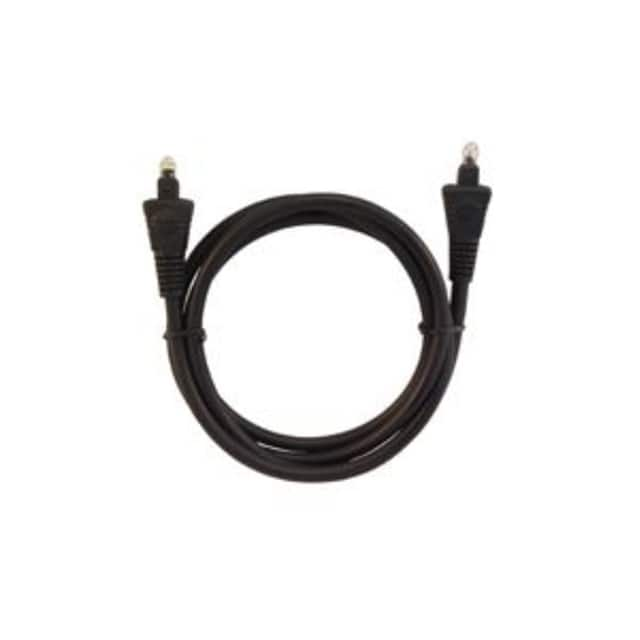
The FIB OPT CBL TOSLINK-TOSLINK 3.7M (SKU DGA652512, Homevision Technology Inc) represents a workhorse category in optical interconnect: a plastic optical fiber (POF) patch cable with standard TOSLINK connectors, specified at 3.7 meters. While it appears mundane, this component sits at the intersection of several meaningful trends—home theater modernization, industrial EMI-immune networking, and the broader shift toward optical links in short-reach applications. For procurement teams, understanding its technical basis and market dynamics is more valuable than the unit price alone suggests.
The core technology is well established: a 1 mm PMMA (polymethyl methacrylate) step-index core with fluorinated cladding, terminated with TOSLINK (EIAJ/JIS F05) connectors. POF is attractive because it tolerates misalignment, is immune to electromagnetic interference, and costs a fraction of glass fiber. Recent innovations are incremental but relevant: improved jacket compounds for tighter bend radii, better connector ferrule molding for lower insertion loss (typically under 0.5 dB per connector), and higher-grade POF grades supporting 125–250 Mbps links over tens of meters. Some vendors now offer hybrid constructions and armored jackets for industrial environments. The 3.7 m length is notable—it fills the gap between common 1–3 m consumer cables and longer 5–10 m runs, a sweet spot for wall-mounted TVs, AVR-to-display routing, and rack-to-rack links in small studios.
Market demand for TOSLINK assemblies is being reshaped rather than eliminated by HDMI and eARC. Consumer audio remains the largest volume driver, but the mix is shifting. Home theater and gaming setups still rely on optical S/PDIF for legacy AVRs and soundbars; professional AV uses TOSLINK for galvanic isolation in installed systems; and industrial and medical equipment increasingly adopt POF for short, noise-immune data links. Demand is steady in mature markets and growing in price-sensitive regions where optical audio remains a cost-effective upgrade path. Unit volumes are healthy, but ASPs face persistent downward pressure from Asian contract manufacturers, making differentiation—brand, certification, and reliability—the primary margin lever.
Supply chain dynamics for POF cables are relatively benign compared with semiconductor-adjacent components. Raw materials (PMMA resin, fluoropolymers) are broadly available, though fluoropolymer pricing has shown volatility tied to environmental regulation of PFAS chemistry. Manufacturing is concentrated in China, Taiwan, and Vietnam, with connector molding often co-located with assembly. Lead times for standard lengths typically run 2–6 weeks for volume orders, extending during peak consumer electronics seasons or when resin prices spike. Pricing outlook is stable-to-soft: overcapacity in POF extrusion and intense competition among ODMs keep downward pressure on commodity SKUs. The risk is less about price and more about supplier consolidation and brand availability—niche brands like Homevision can face allocation or discontinuation risk, so dual-sourcing and specification flexibility (accepting equivalent 3–5 m lengths) are prudent.
Emerging applications are quietly expanding the addressable market. Electric vehicle and charging infrastructure test equipment uses POF for isolated diagnostics. Industrial automation leverages POF in noise-heavy factory floors where copper is unreliable. Medical devices use optical links for patient isolation. And in consumer space, the retro-gaming and hi-fi communities are driving renewed demand for quality TOSLINK cables as enthusiasts rebuild physical media setups. Each of these niches values reliability and certification over rock-bottom price, which favors branded, tested assemblies.
The technology roadmap for this category is evolutionary. Expect continued improvement in POF bandwidth (GI-POF variants reaching gigabit-class short links), tighter connector tolerances for lower jitter, and broader adoption of USB-C and HDMI-embedded optical as competing interfaces—though TOSLINK's simplicity and cost ensure a long tail. Watch for miniaturized connectors and hybrid copper-optical cables in AV installations. Regulatory impact is moderate but real: RoHS and REACH compliance is standard for cable jackets and connector plastics, and PFAS restrictions in the EU could affect fluoropolymer cladding sourcing over the next several years. Automotive qualification (AEC-Q100/Q200-style) is not typical for consumer TOSLINK but is increasingly requested for industrial and vehicle-adjacent uses, favoring suppliers with documented test capability.
Strategic recommendations for procurement teams: First, treat this as a commodity but manage it as a risk item—qualify at least two sources and confirm brand continuity for any design-in. Second, standardize on performance specifications (insertion loss, jacket material, bend radius) rather than exact SKUs, allowing length and brand substitution. Third, monitor fluoropolymer regulation as an early-warning signal for cost and availability shifts. Fourth, consolidate orders to capture volume pricing while maintaining safety stock of 4–8 weeks given seasonal demand peaks. Finally, evaluate total cost of ownership: a slightly higher-priced, certified cable reduces field failures and returns in AV and industrial deployments, where downtime costs dwarf component savings.