Why 10000PF 50V X7R 0805 Capacitors Dominate Design
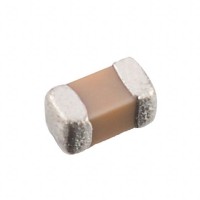
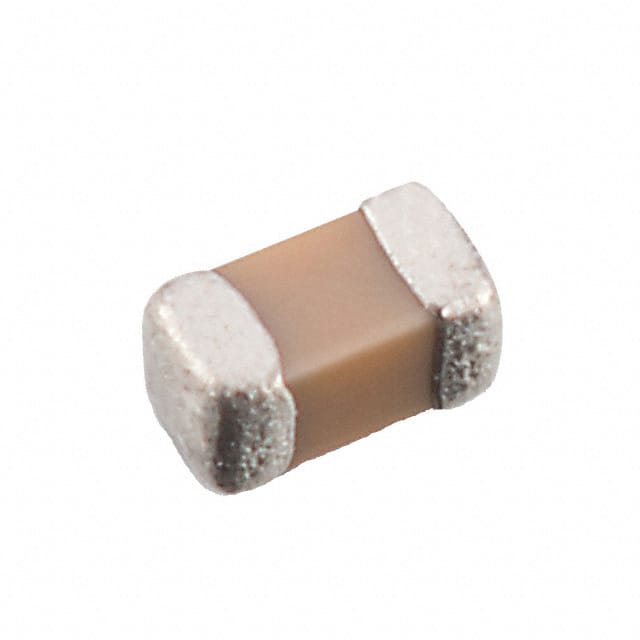
The humble 10000pF 50V X7R 0805 multilayer ceramic capacitor (MLCC), such as the Würth Elektronik 885382207006, is a fundamental building block of modern electronics. While it may appear to be a commodity part, this specific component sits at a critical intersection of material science, supply chain complexity, and evolving market demand. Understanding its technology, market dynamics, and future trajectory is essential for any procurement team seeking to secure supply and optimize cost.
Technology Behind the Component and Recent Innovations
The 885382207006 is a Class II MLCC, utilizing an X7R dielectric. This designation guarantees a stable capacitance over a temperature range of -55°C to +125°C, with a maximum capacitance change of ±15%. The core innovation here lies in the manufacturing process. Würth Elektronik, like other leading manufacturers, has invested heavily in thinner dielectric layers and higher layer counts. For a 10000pF (10nF) part at 50V in an 0805 package, the technology is mature, but recent innovations have focused on improving reliability and voltage stability. Advanced nickel electrode formulations and precise sintering processes reduce internal defects, mitigating the risk of "capacitance loss under DC bias"—a phenomenon where the effective capacitance drops significantly when voltage is applied. This is particularly critical for decoupling applications in power supply circuits, where a 10nF cap must maintain its value.
Market Trends and Demand Drivers
The demand for this specific component is being driven by several converging trends. The electrification of the automobile is a primary force. Every electric vehicle (EV) contains thousands of MLCCs, and a 10000pF 50V X7R 0805 is a workhorse in infotainment, battery management systems (BMS), and DC-DC converters. Beyond automotive, the proliferation of IoT devices, including smart home sensors, wearables, and industrial controllers, creates a steady baseline demand. These devices require reliable decoupling and filtering in compact packages. Furthermore, the expansion of 5G infrastructure and the push for higher data rates in telecommunications equipment are driving demand for components that can perform consistently at higher frequencies, where the X7R's low ESR (Equivalent Series Resistance) is advantageous.
Supply Chain Dynamics: Global Sourcing, Lead Times, Pricing
The MLCC market has experienced severe cycles of shortage and oversupply. For the 10000pF 50V X7R 0805, the current environment is one of relative stability, but with persistent risks. Lead times for standard parts from major manufacturers like Würth Elektronik, Murata, and TDK have normalized to between 8 and 14 weeks, a significant improvement from the 30+ week periods seen during the 2018-2020 shortage. Pricing has stabilized, with a slight downward pressure due to increased capacity from Chinese manufacturers. However, the critical dynamic is geopolitical sourcing. Many automotive and industrial OEMs are now actively diversifying away from single-region supply. The Würth Elektronik part, being European-sourced, offers a strategic advantage for companies prioritizing supply chain resilience. The key risk remains the capacity allocation by major Japanese and Korean manufacturers, who are prioritizing high-value, high-reliability automotive-grade components (e.g., AEC-Q200 qualified), potentially squeezing supply for standard commercial-grade parts.
Emerging Applications Driving New Demand
New applications are emerging beyond traditional uses. The medical device sector is a growing demand driver, particularly for portable diagnostic equipment, infusion pumps, and hearing aids, which require the reliability and small footprint of the 0805 package. Another is advanced driver-assistance systems (ADAS) in non-automotive vehicles, such as agricultural machinery and drones. These systems require robust filtering for high-speed data lines, and the X7R dielectric's temperature stability is crucial. Finally, the renewable energy sector—specifically microinverters for solar panels and power converters for energy storage systems—is increasingly using these capacitors for DC-link decoupling and filtering, where 50V ratings are common in low-voltage subsystems.
Technology Roadmap: What's Next for This Component Category
The technology roadmap for this specific capacitance and voltage rating is not about dramatic breakthroughs, but about incremental performance gains. We can expect continued advancements in base metal electrode (BME) technology to achieve even higher reliability with thinner layers, reducing the physical size of the 0805 package further in future generations. The focus will be on improving DC bias performance and aging characteristics (X7R capacitors lose capacitance over time, though this is reversible with heating). Furthermore, the industry is moving toward embedded capacitors within printed circuit boards for high-density designs, potentially reducing the need for discrete 0805 parts in some advanced applications. However, for the foreseeable future, the 0805 platform remains a cost-effective and reliable standard.
Impact of Industry Regulations (RoHS, REACH, Automotive Qualifications)
Regulations are a non-negotiable factor. The Würth 885382207006 is fully RoHS compliant, restricting hazardous substances like lead and cadmium, and REACH compliant, addressing chemical safety. For automotive applications, the key qualification is AEC-Q200, the stress test qualification for passive components. While the base 885382207006 is a commercial-grade part, Würth offers automotive-grade variants (often with a different SKU suffix) that undergo rigorous testing for temperature cycling, moisture resistance, and mechanical shock. Procurement teams must ensure they are specifying the correct qualification grade for their target application. Using a commercial-grade part in a safety-critical automotive system is a serious compliance and liability risk. Similarly, for defense and aerospace applications, MIL-PRF-55681 or MIL-PRF-123 standards may apply, which are far more stringent than commercial X7R specifications.
Strategic Recommendations for Procurement Teams
First, do not treat this as a pure commodity. The difference between a standard 10000pF 50V X7R 0805 and one from a premium supplier like Würth Elektronik lies in batch-to-batch consistency, reliability data, and technical support. Second, evaluate your voltage derating needs. For 50V applications, using a 100V-rated part might be overkill, but for high-reliability designs, a 20% voltage derating is standard practice. Third, build a multi-sourcing strategy. While Würth is excellent, having a qualified second source (e.g., Murata, Samsung Electro-Mechanics) provides leverage and risk mitigation. Fourth, negotiate long-term agreements (LTAs) with volume forecasts. This secures allocation and often provides price protection. Fifth, engage early with your engineering team to understand the exact performance requirements (DC bias, ripple current, temperature extremes). Finally, monitor the regulatory landscape. Upcoming changes to RoHS or REACH could require requalification of existing designs. Proactive procurement, informed by technology and market trends, turns a seemingly simple capacitor into a strategic advantage.